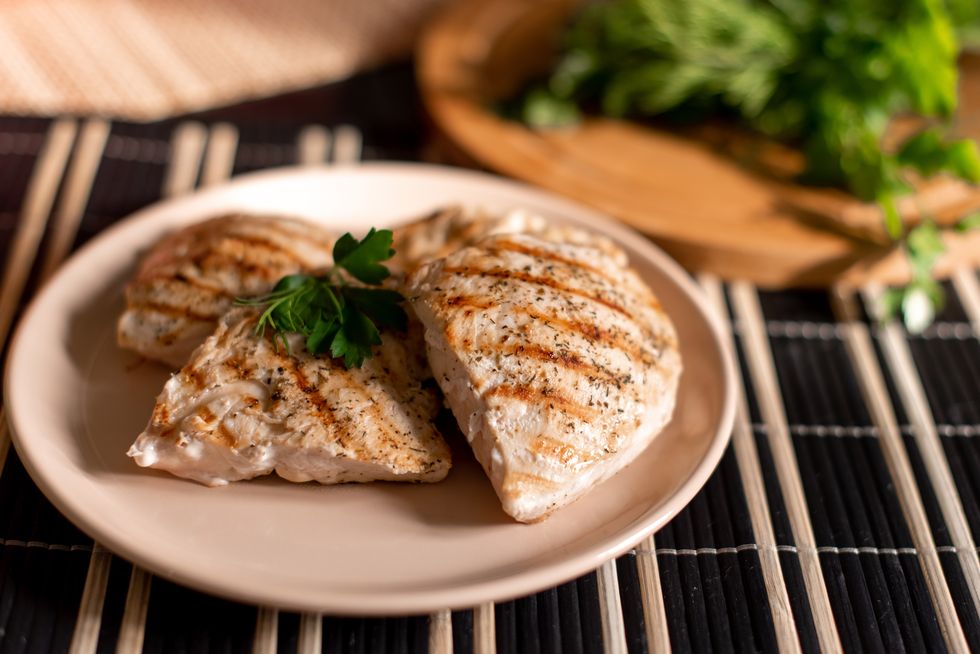
Your standard 130g chicken breast contains 34g of the muscle macro, making it 'an excellent, complete source of protein,' says Dom Haigh, nutritionist at Hero. ''Complete' means it contains all nine essential amino acids that are vital for optimal physiological function and must be provided to your body from food.'
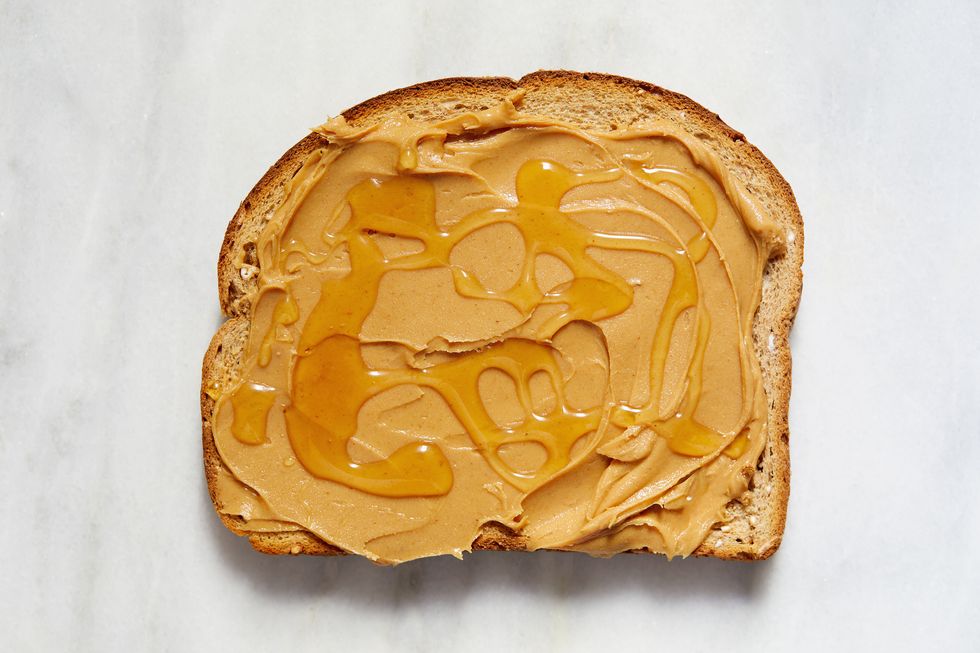
Each 30g spoonful of peanut butter provides around 8g protein, 172 calories and 6g carbs. Spoon yours into celery boats – an entire stalk racks up just 1.2g carbs – or chop up some carrots for a marginally higher-carb snack. If you can stomach the flavour clash, slathering Marmite on top will boost levels of the growth hormone IGF-1, fuelling extra muscle gain.
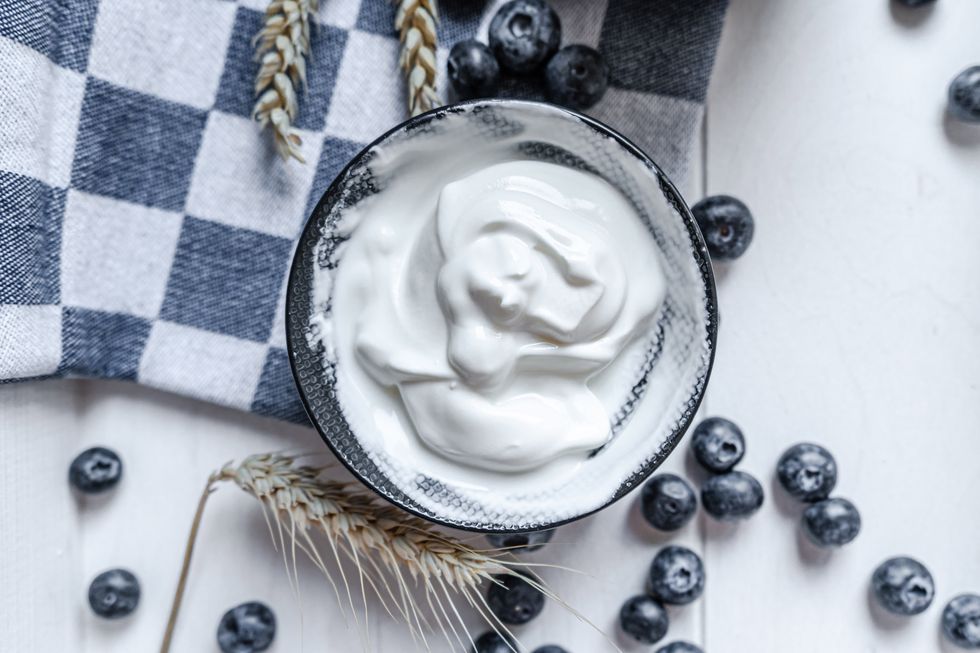
Tangy and filling, Greek yogurt contains twice the protein of regular yoghurt, at around 10g per 100g portion. 'Yoghurt is also a good source of calcium, which is important for healthy bones and muscle contraction – including that of the heart,' says Rob Hobson, registered nutritionist at Healthspan. Skip flavoured options and top with fresh fruit instead.
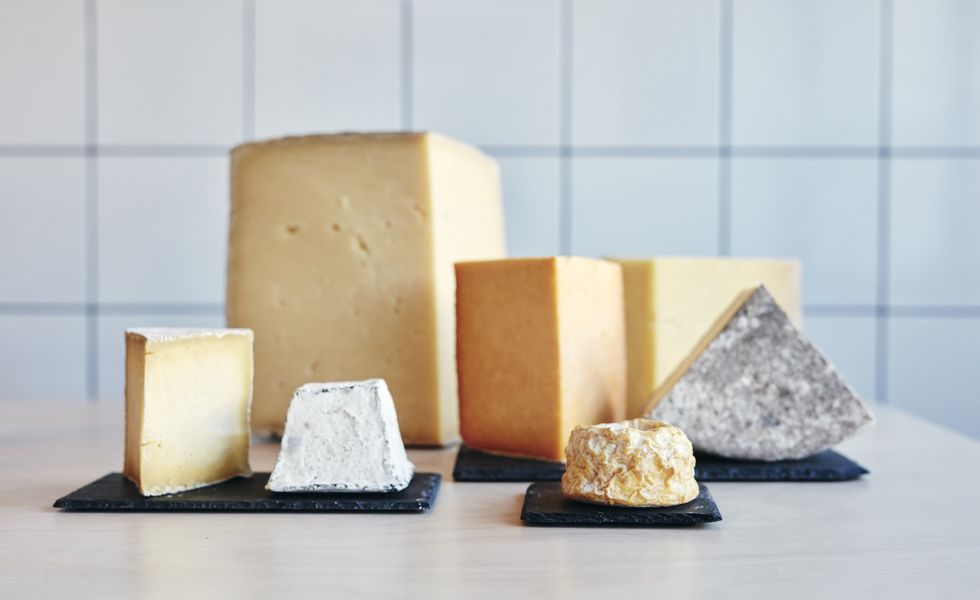
The protein content of cheese varies depending on the type. Parmesan, Swiss, Pecorino, Edam and Gouda offer the most bang-for-buck, providing between 26g and 35g of the muscle macro per 100g serving, along with around 1.3g carbs. Pair with a handful of antioxidant-packed olives to power yourself through the 3pm slump.
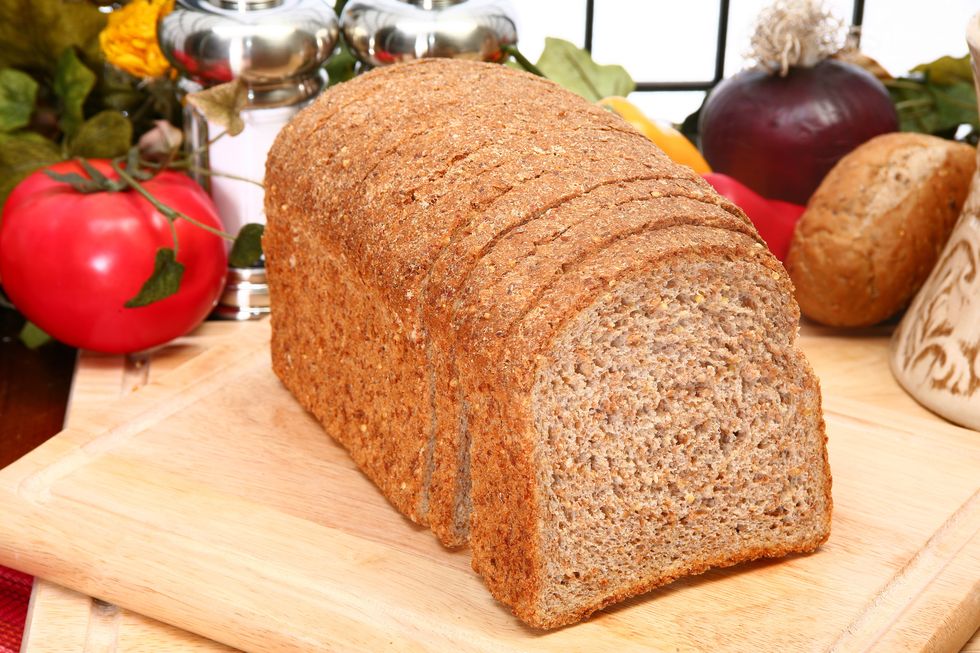
It's bread, but not as you know it. 'Ezekiel bread breaks the mould when it comes to protein as it's a complete source – something other breads are not,' says Haigh. Made from sprouted grains, 'it's an excellent source of plant-based protein and contains many other highly beneficial nutrients such as folate, vitamin C, vitamin E, and dietary fibre.'
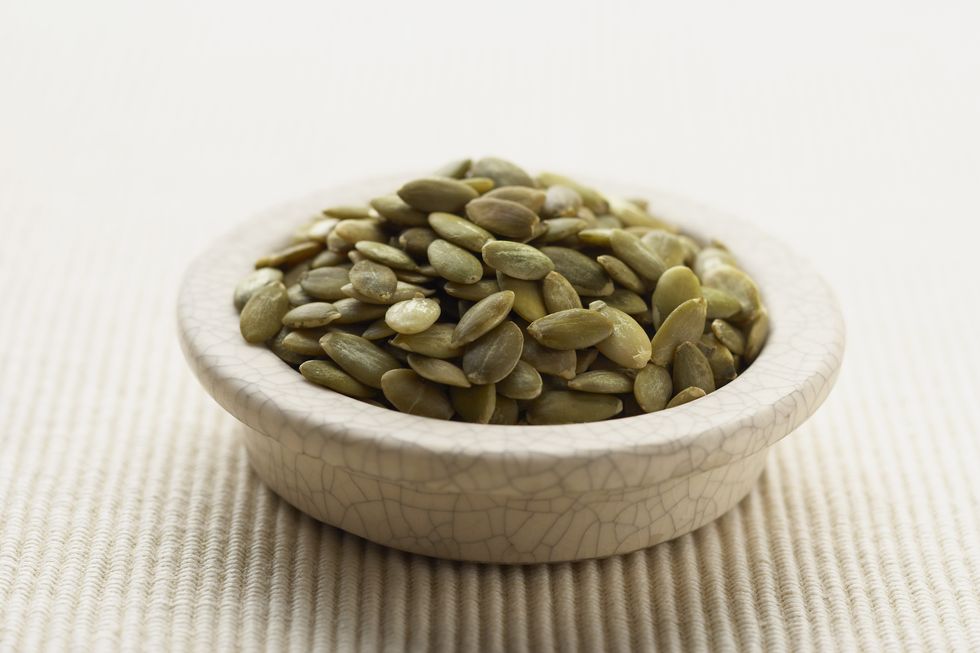
Packing 9g protein into every 30g serve, these green seeds will plug the gap between lunch and dinner. They're especially high in zinc, which helps your body produce testosterone, containing one fifth of your daily needs in every handful. Pumpkin seeds aren't particularly flavourful straight out the packet, so try coating them in Tamari before toasting in the oven.
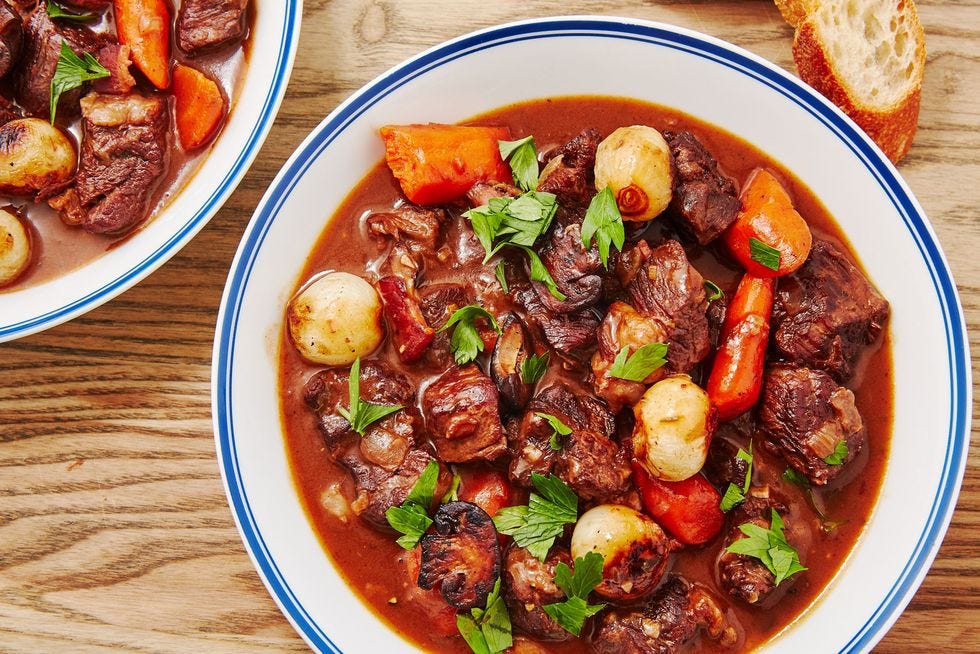
It would be remiss to discuss the best high protein foods without giving steak a mention. While you probably shouldn't eat it every day, lean red meat boasts 26.4g protein per 100g serving, 'with a full spectrum of amino acids,' says Hobson. Like pumpkin seeds, 'lean red meat is a good source of zinc, which is essential for men's reproductive health,' he says. It's also exceptionally high in iron, which your body needs to release energy from cells.
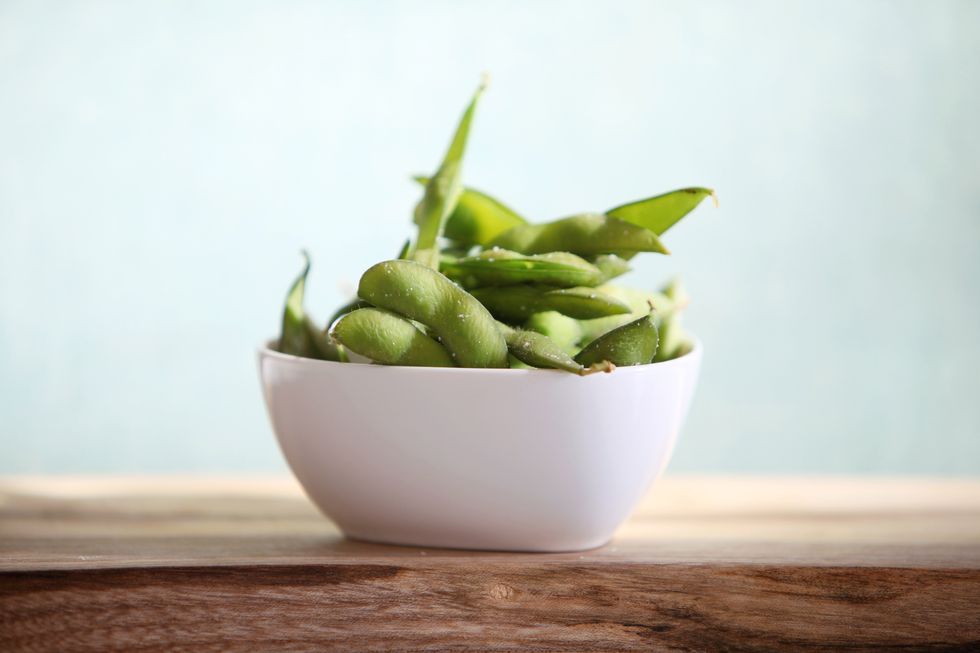
Granted, unripened soybeans don't sound particularly appetising, but they're an excellent source of plant-based protein – one 50g serve contains around 6g, plus 4g carbs and 70 calories. Unlike other legumes, edamame provides all of the essential amino acids your body needs. Sprinkle over salad, stir them into pasta, or eat them right out the shell.
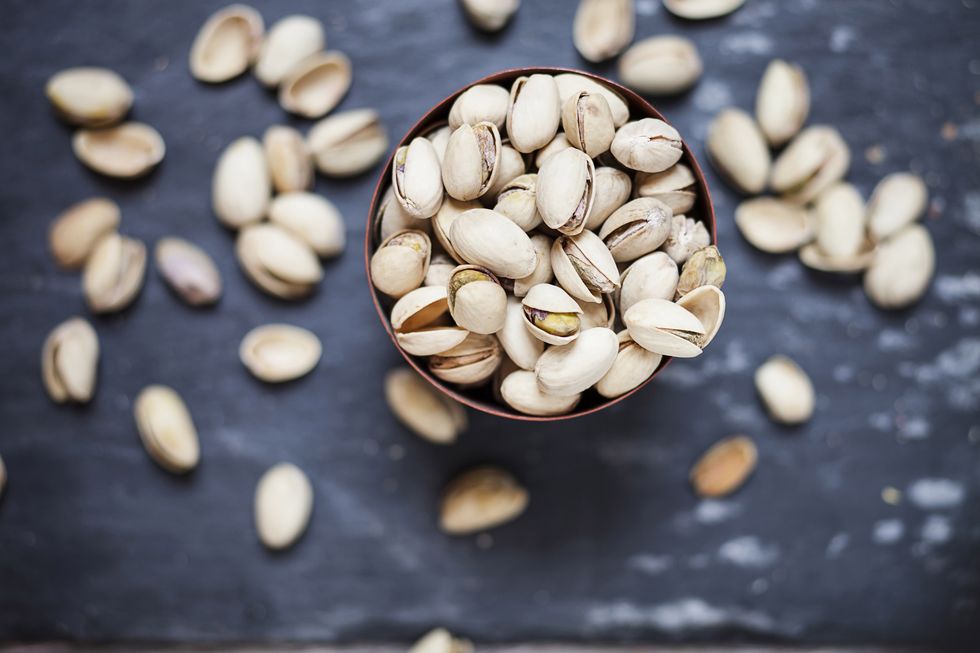
As nuts go, pistachios are among the lowest in calories and one of the highest in protein content, delivering 6.3g in every 30g handful. 'They are a great source of poly and monounsaturated fat – the more beneficial types of dietary fat, leading to a decreased risk of heart disease,' says Haigh. 'Finally, they contain an abundance of antioxidants, which prevent cell damage and risk of disease.'
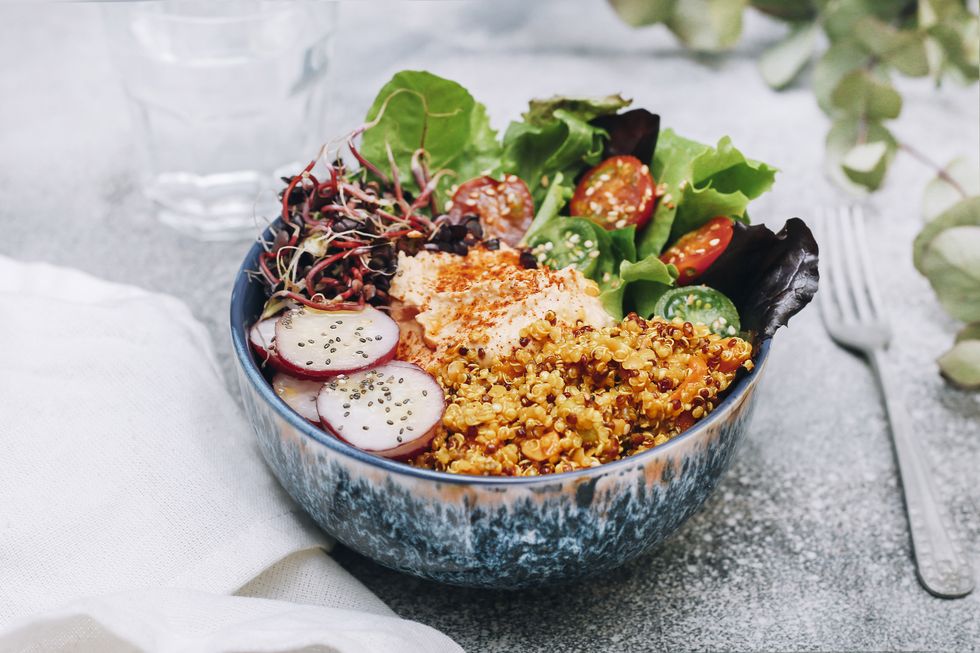
Many plant-based protein sources lack certain essential amino acids – lysine is a common one – but not quinoa, which contains a decent balance of all nine. And we're not talking trace amounts, either: you'll find an impressive 7g protein in every 50g serve. 'This pseudo-grain is also good source of magnesium and certain B vitamins, which are involved in converting food into energy,' adds Hobson.